


Impladent OsteoGen Plugs Bone Graft – Slim, Large & X-Large
SKU:GO-OGPL
Couldn't load pickup availability
Professional Use Only. This product is intended for use by licensed dental professionals only. By purchasing this item, you certify that you are a qualified practitioner and that this product will be used in accordance with local regulations and professional standards. Verification of professional credentials may be required prior to shipment.
- Vendor:
- Tags: Bone graft, Impladent, Opl1020-10, Opl1020-25, Opl1020-5, Ops625-10, Ops625-25, Ops625-5, Opxl1520-5, Osteogen plugs, Plug graft, Socket preservation
About the Product
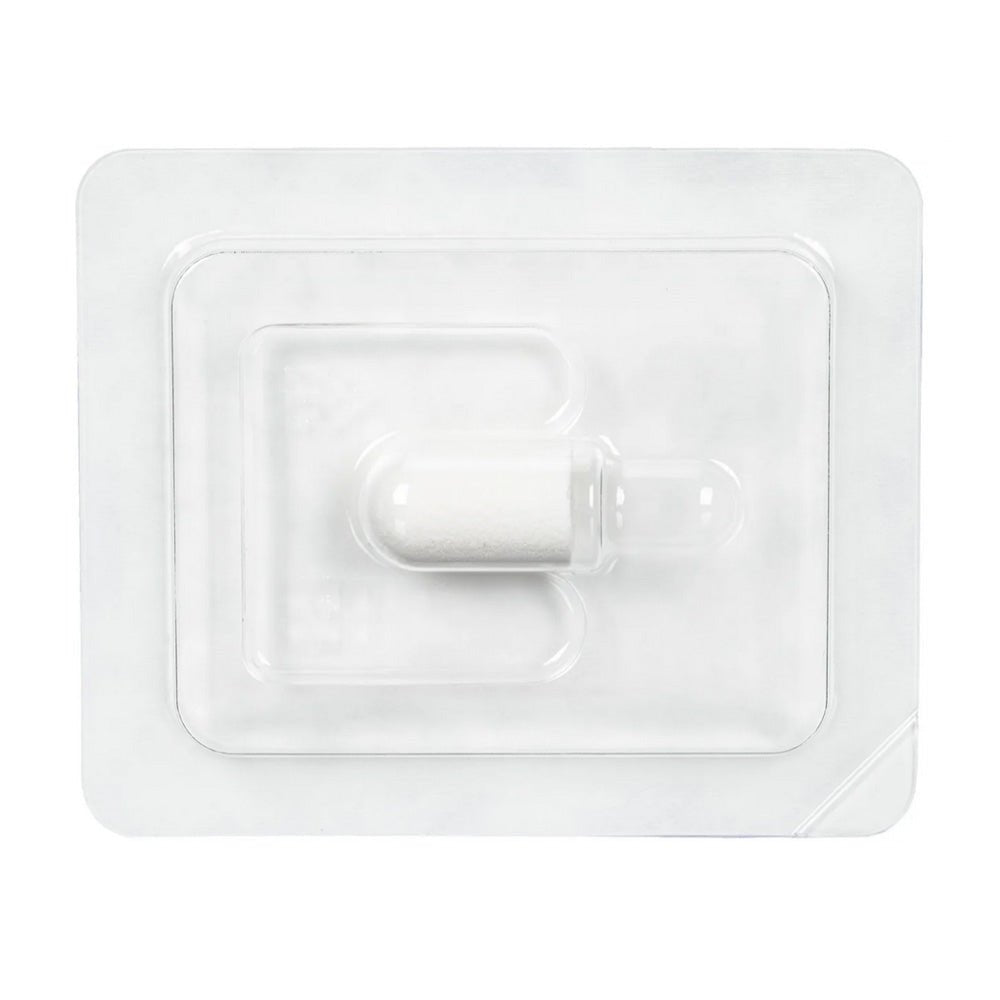
OsteoGen® Plugs from Impladent are a one-step bone graft for socket preservation. Each plug combines OsteoGen bioactive, resorbable calcium apatite crystals with a Type I bovine Achilles tendon collagen carrier, forming a structure that mimics the mineral and organic parts of natural bone. If you can place a collagen plug, you can offer grafting in your practice.
Unlike a plain collagen plug, which mainly acts as a wound dressing, an OsteoGen Plug delivers real graft material into the socket. Buy single plugs or boxes of 5, 10 or 25, or save with our OsteoGen Plugs Buy 5 Get 1 Free bundle.
Why dentists choose OsteoGen Plugs
- One-step delivery: the graft crystals are already built into the collagen carrier, so there's no particulate to mix or pack.
- No membrane required: place the plug dry into the socket and suture over it.
- Stays in place: the hydrophilic collagen absorbs blood and expands slightly for a snug, stable fit, which reduces the risk of washout or loose granules migrating into soft tissue.
- Ideal indication: after an atraumatic extraction where all socket walls are preserved.
- Bioactive and resorbable: OsteoGen is a non-ceramic graft that resorbs and is replaced by the patient's own bone, without leaving particles that can interfere with future implant placement.
- Lower cost per site: less material and chair time than a separate particulate graft and membrane.
Sizes
| Size | Dimensions | Pack sizes | Impladent part # |
|---|---|---|---|
| Slim | 6 mm × 25 mm | 5, 10, 25 | OPS625-5, OPS625-10, OPS625-25 |
| Large | 10 mm × 20 mm | 1, 5, 10, 25 | OPL1020-5, OPL1020-10, OPL1020-25 |
| X-Large | 15 mm × 20 mm | 5 | OPXL1520-5 |
Shelf life: 4 years from the date of manufacture.
Technique
- Extract and debride: remove the tooth as atraumatically as possible and thoroughly debride the socket.
- Place the plug: insert the OsteoGen Plug dry into the socket. It absorbs blood and stabilizes the clot while delivering the graft.
- Suture: approximate the tissue and place a crisscross suture over the plug. No membrane is needed.
- Heal: as the graft resorbs, the collagen carrier and crystals act as scaffolds for new bone and soft tissue.
- Monitor: follow the site radiographically until it is ready for implant placement.
Always follow the manufacturer's instructions for use.
Healing and radiographic timeline
- Day of surgery: the graft is radiolucent.
- About 3–6 months: the site becomes radiopaque as the patient's own bone replaces the graft.
- Implant placement: once the site is fully radiopaque, enough host bone is considered to have formed to place the implant.
For a full walk-through, read our guide: OsteoGen Plugs: one-step socket preservation, technique and healing timeline.
Videos
See OsteoGen Plugs placed in a real case, and hear from the clinicians who use them.
Clinical case: OsteoGen Plug placed after extraction (6 min)
An OsteoGen Plug placed in a fresh extraction socket and sutured over, with no membrane.
- 0:00 – Tooth extraction
- 1:09 – Assessing the socket after extraction
- 1:44 – Overview of the OsteoGen Plug graft material
- 3:31 – Preparing the graft
- 4:36 – Placing the plug and suturing over it
Webinar: Dr. Tim Kosinski on predictable, cost-efficient grafting (80 min)
Implant educator Dr. Timothy Kosinski walks through how he uses OsteoGen Plugs to simplify socket preservation before implant placement.
- 9:53 – Plugs vs. traditional grafting: why a membrane is often unnecessary. Dr. Kosinski estimates this cuts material cost by about 42% and saves surgical time.
- 10:49 – Atraumatic extraction with Physics Forceps to protect the thin facial bone plate.
- 11:13 – Socket preparation: thorough curettage to remove all granulation tissue.
- 16:09 – Post-op care for the first week, and the 3–4 months of bone turnover he typically sees before placing an implant.
- 34:59 – Immediate implants threaded into a grafted socket, with OsteoGen filling the gaps.
- 36:05 – His crest-to-facial suturing technique, which lets the suture slide over the graft instead of through it.
- 54:34 – Sinus lifts using OsteoGen Strips to lift the Schneiderian membrane.
The science behind OsteoGen Plugs (8 min)
Why the OsteoGen crystals inside each plug behave the way they do, and the research behind them.
- 0:16 – Why the crystals are bioactive and biomimetic.
- 1:22 – Low-density, highly microporous crystals grown individually rather than ground into particles, in clinical use since 1984.
- 1:43 – How calcium and phosphate ions and an alkaline environment support mineralization.
- 2:21 – How compacted collagen and crystals help keep fibroblasts and epithelium out of the site.
- 3:37 – Magnified views of the crystals embedded in Type I bovine collagen.
- 4:09 – Studies showing bone growing directly onto the crystals, gradual resorption, and strong osteoblast growth on OsteoGen compared with xenograft.
Not all socket preservation plugs are equal (6 min)
How OsteoGen Plugs differ from plain collagen plugs and other graft plugs.
- No membrane required, because the plug controls connective tissue migration on its own.
- Resorption matched to bone formation: the collagen resorbs within weeks and the crystals over months.
- Easy handling: the plug compresses to fit and swells slightly with blood for a stable fill.
- Radiographic tracking: radiolucent when placed and increasingly radiopaque as it converts to bone.
Frequently asked questions
Do OsteoGen Plugs need a membrane?
No. Place the plug into the socket and secure it with a crisscross suture. The collagen carrier contains the graft, so no separate membrane is needed.
Is the plug hydrated before placement?
No. Place it dry. It absorbs the patient's blood in the socket.
How long until I can place an implant?
The site goes from radiolucent at placement to radiopaque over about 3–6 months as host bone replaces the graft. Implant placement can proceed once the site is fully radiopaque.
Which size should I choose?
Choose the size that best fits the socket: Slim (6 × 25 mm), Large (10 × 20 mm) or X-Large (15 × 20 mm).
OsteoGen Plug guides
- OsteoGen Plugs: socket preservation technique and healing timeline
- OsteoGen Plug vs. collagen plug vs. allograft: choosing a socket preservation graft
- Socket preservation plug grafts compared: how OsteoGen Plugs stack up
Other OsteoGen products
- OsteoGen Strips: a mineralized collagen strip to cover and contain particulate, and for sinus lifts, ridge expansion and immediate implants.
- OsteoGen synthetic bone graft particulate: loose calcium apatite crystals for larger periodontal and oral-maxillofacial defects.
OsteoGen® is a registered trademark of Impladent Ltd.


- 5 stars: 3 (100%)
- 4 stars: 0 (0%)
- 3 stars: 0 (0%)
- 2 stars: 0 (0%)
- 1 star: 0 (0%)
Great product for reliable 4 wall defects. I use with vicryl sutures.
Easy to handle, and it stays put with just a couple of sutures. This plug turns socket preservation into a 5 minute procedure.
Great stuff-just wish it was cheaper